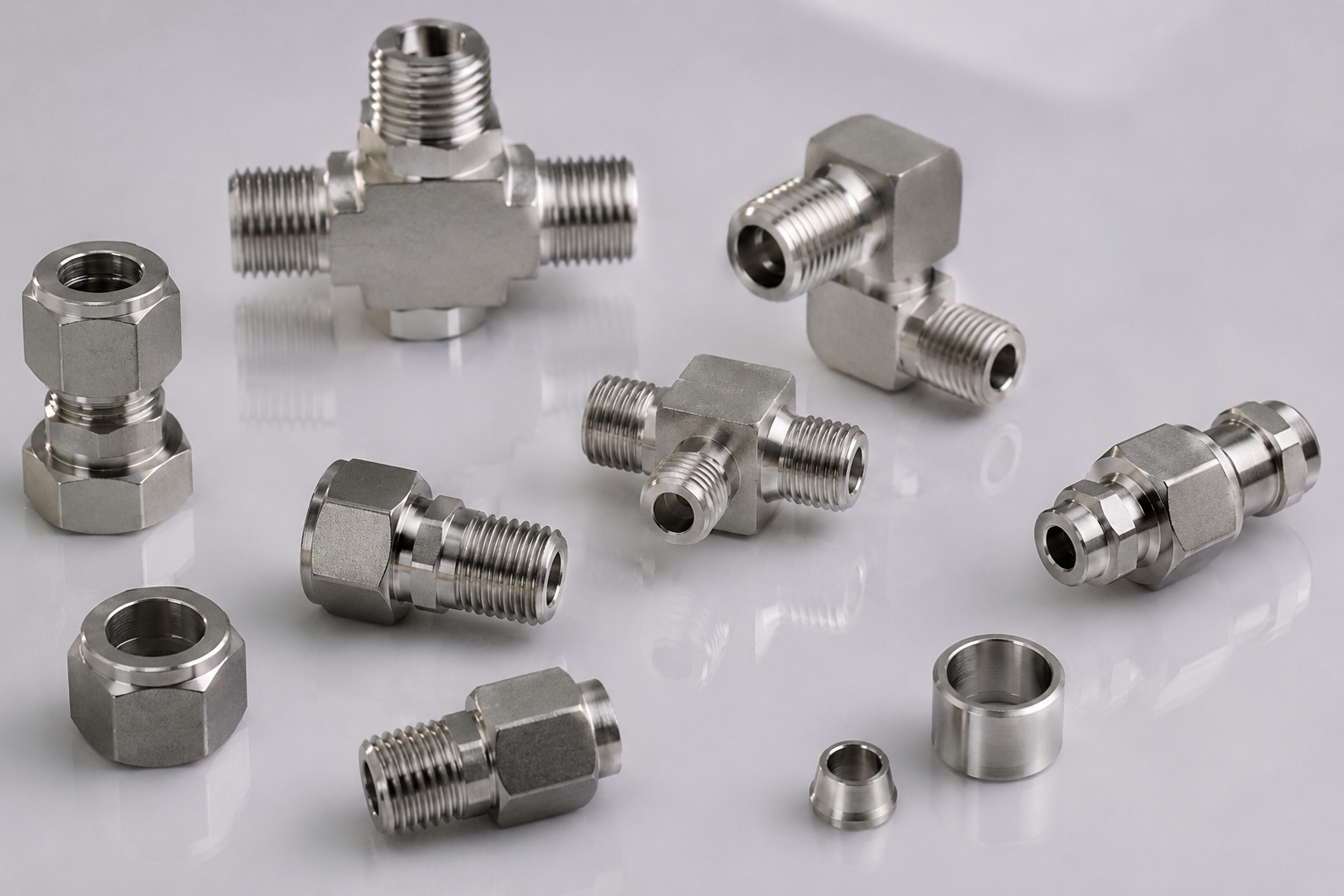
Stainless Steel 321 Instrumentation Fittings are specialized pipe fittings used to connect tubing systems in measurement instruments, pressure transmitters, analytical equipment, and fluid control assemblies. These fittings are commonly manufactured in forms such as compression fittings, ferrule fittings, unions, elbows, tees, connectors, adapters, and reducers. They ensure secure and leak-tight connections in instrumentation tubing networks used for gas, steam, hydraulic fluids, and chemical media. The base material, Stainless Steel 321, is an austenitic stainless steel alloy stabilized with titanium. Its chemical composition generally includes chromium for corrosion resistance, nickel for ductility and toughness, and titanium for stabilization against carbide precipitation during welding or prolonged exposure to elevated temperatures. This metallurgical structure enhances resistance to oxidation, scaling, and high-temperature degradation. Because of these properties, Stainless Steel 321 instrumentation fittings perform reliably in temperatures up to approximately 870°C in intermittent service and around 925°C in continuous service. The alloy maintains structural integrity under thermal stress and resists corrosion caused by acidic chemicals, high-temperature steam, and oxidizing environments. These characteristics make it highly suitable for pressure equipment, heat exchangers, industrial piping networks, and precision instrumentation assemblies.
Stainless Steel 321 Instrumentation Fittings deliver a combination of mechanical strength, corrosion resistance, and thermal stability that is highly valued in demanding industrial operations. Their titanium-stabilized composition significantly reduces the risk of intergranular corrosion after welding or exposure to high heat. This property is particularly beneficial in fabrication environments where piping systems undergo repeated thermal cycles. Another key advantage is their durability and long operational life. These fittings retain mechanical strength even under fluctuating temperatures and pressure loads. In aggressive chemical environments, Stainless Steel 321 fittings demonstrate strong resistance to oxidation, scaling, and corrosion caused by organic and inorganic compounds. Machinability and fabrication flexibility are also notable benefits. Stainless Steel 321 can be formed, welded, and machined into precision components while maintaining dimensional accuracy and surface integrity. For industries focused on long-term cost efficiency, these fittings reduce maintenance frequency and downtime, making them a reliable solution for process control systems, industrial piping networks, and pressure instrumentation lines.
Instrumentation tubing systems in industrial plants require reliable connection components to maintain measurement accuracy and operational safety. In these environments, companies recognized as Stainless Steel 321 Instrumentation Fittings Manufacturers play a critical role in providing high-precision fittings used in refineries, petrochemical complexes, and heavy engineering projects where high temperature resistance and corrosion protection are essential for process stability. Large-scale industrial projects depend on efficient supply chains to maintain production continuity. Organizations known as Stainless Steel 321 Instrumentation Fittings Suppliers ensure consistent availability of these fittings for fabrication workshops, plant maintenance teams, and equipment manufacturers who require dependable components for pressure gauges, flow meters, and hydraulic instrumentation systems.
Engineering contractors and industrial procurement specialists often rely on established distribution networks. In such cases, Stainless Steel 321 Instrumentation Fittings Stockists maintain extensive inventories that support quick delivery for shutdown maintenance, plant upgrades, and emergency replacement requirements across industries such as power generation, chemical processing, and offshore drilling. Global infrastructure development and industrial expansion have increased international demand for high-quality stainless steel instrumentation components. Businesses operating as Stainless Steel 321 Instrumentation Fittings Exporters support worldwide engineering projects by supplying precision fittings to markets involved in energy production, marine engineering, oil and gas transportation, and industrial automation systems.
Stainless Steel 321 Instrumentation Fittings are produced according to internationally recognized material and manufacturing standards to ensure safety, reliability, and compatibility with industrial piping systems. The material grade typically conforms to ASTM A182 for forged stainless steel fittings used in high-pressure services and ASTM A479 or ASTM A276 for stainless steel bars used in machining instrumentation components. Under ASME standards, the equivalent designation is ASME SA182 Grade F321, which is commonly used in pressure vessels, heat exchangers, and high-temperature process equipment. Compliance with these standards ensures consistent chemical composition, mechanical strength, and dimensional accuracy required for instrumentation assemblies and pressure equipment used in demanding industrial applications.
Steel products used in industrial fabrication are classified and named according to international standards that define material composition, mechanical properties, and dimensional tolerances. Stainless steel materials are commonly specified under standards such as ASTM and ASME in North America, EN standards in Europe, DIN in Germany, JIS in Japan, and ISO for global standardization. Products including stainless steel bars, pipes, tubes, plates, sheets, and coils are assigned grade numbers that identify alloy composition and intended service conditions. For example, stainless steel pipes and tubes used in instrumentation systems may follow ASTM A312 or ASTM A213 specifications, while plates and sheets used in structural fabrication often conform to ASTM A240. These standardized naming conventions help engineers, procurement specialists, and manufacturers ensure compatibility across international supply chains and industrial engineering projects.
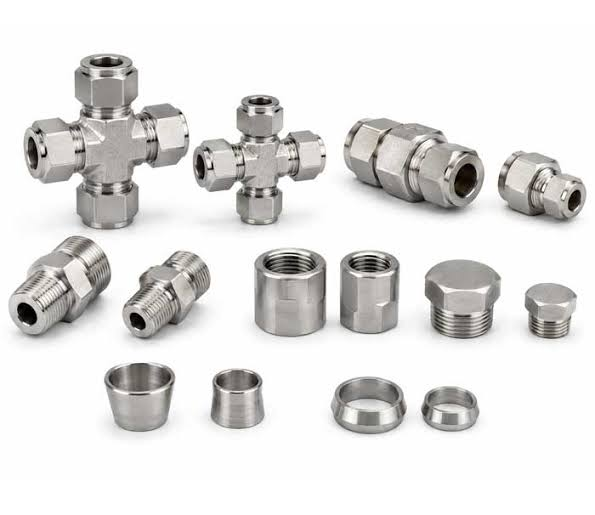
Stainless Steel 321 Instrumentation Fittings are available in different specifications, sizes, thread configurations, pressure ratings and types as specified below.
| Specifications | Details |
|---|---|
| Specifications | ASTM A182, A276, A479 / ASME SA182, SA276, SA479 |
| Size | 2mm~25mm and 1/16"~1" |
| Thread | NPT, PT, BST, NPS, PS, BSP |
| Pressure | 6000PSI for Stainless Steel 300/1000/3000PSI for Brass |
| Types | Tube to Union, Tube to Male, Tube to Female, Instrument Pipe Fittings, Accessories |
Stainless Steel 321 Instrumentation Fittings are specified according to the standards, sizes, thread configurations, pressure ratings and fitting types listed in the table above.